Puasa dan Rebus Kubis

Sumber gambar: Google


Rasa manis yang tersembunyi ditemukan dalam perut yang kosong ini!

Ketika perut kecapi telah terisi, ia tidak dapat bersuara, nada rendah maupun nada tinggi.

Jika otak dan perutmu terbakar karena puasa, api mereka akan mengeluarkan ratapan dalam dadamu.

Melalui api itu, setiap waktu kau akan membakar seratus tabir– kau akan mendaki seribu seribu derajat di atas Jalan dan di dalam hasratmu.

Kosongkan perutmu! Merataplah seperti sebuah kecapi dan sampaikan keinginanmu pada Tuhan! Kosongkan perutmu dan bicaralah tentang misteri bagi ilalang.

Jika kau biarkan perutmu penuh, ia akan menjadi Setan bagimu di saat Kebangkitan, sebagai ganti akalmu, menjelma berhala sebagai bentuk Kabah.

Ketika kau puasa, amal-amal baik mengelilingimu bagaikan hamba sahaya, budak-budak, dan bergerombol.

Teruskan puasamu, karena ia adalah stambuk Sulaiman. Jangan kau berikan stambuk itu pada Setan, jangan kacaukan kerajaanmu.

Dan jika kerajaan dan pasukanmu hendak lari darimu, pasukanmu akan kembali, dan berilah dia perintah!

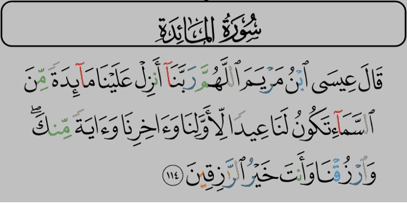
Hidangan telah datang dari surga bagi mereka yang berpuasa, karena Isa anak Maryam memanggilnya turun dengan doa[1].

Tunggulah Hidangan Rahmah dengan puasamu– ia lebih baik daripada kubis rebus.

Sumber: Rumi, Diwan 1793.

Demikianlah cara Rumi menggambarkan puasa: mudah dicerna, kaya-makna, tidak terkesan menggurui, dan … jenaka. Konon, karena kejenakaan ini maka pesan sufistik Rumi dapat diterima dengan mesem-mesem oleh para ulama besar yang kurang sreg dengan Sufi.

Juga terkait kejenakaan ini, siapa yang mampu berpikir untuk mengaitkan puasa[2] dengan kubis rebus, misalnya. Menariknya lagi, dalam Diwan ini Rumi mengontraskan “kubis rebus” dengan “Hidangan Rahmah” tanpa menjelaskan apa yang dimaksud dengan istilah ini. Dugaan penulis istilah ini merujuk pada “Hidangan dari Langit” sebagaimana yang tercantum dalam doa Nabi Isa Ibnu Maryam:

Isa putra Maryam berdoa, “Ya Tuhan kami, turunkan kepada kami hidangan dari langit (yang hari turunnya) akan menjadi hari raya bagi kami, yaitu bagi bagi orang yang sekarang bersama kami maupun bagi datang setelah kami, dan menjadi tanda bagi kekuasaan Engkau, berikanlah kepada kami rezeki, dan Engkaulah sebaik-baiknya pemberi rezeki (QS 5:114).

Wallahualam bi muradih.

[1] Lihat QS (5:114)

[2] Beberapa tulisan lain mengenai puasa dapat diakses di SINI.


Membaca Hasil Hitung Cepat Pilpres

Sumber gambar: Google

#tak-beda-nyata, #rada-rada bodoh, #justifikasi

Tak-Beda-Nyata

Pemilu Indonesia 2019 baru usai. Proses pelaksanaannya relatif mulus. Ini tentu berkat rahmat-Nya yang patut disyukuri.

Hasil resminya baru akan diketahui dalam hitungan minggu. Tapi gambarannya, khususnya Pilpres, dapat diketahui secara lebih dini berdasarkan hasil hitungan cepat (quick count).

Menariknya, angka hitungan cepat yang beredar secara keseluruhan tidak-beda-nyata dengan hasil Pemilu 2014: Paslon 1 (katakanlah Merah) memperoleh angka sekitar 55%, sisanya untuk Paslon 2 (Katakanlah Hijau).

Tidak hanya itu. Sebaran provinsi juga tak-beda-nyata. Sebagai ilustrasi, JaBar yang pada 2014 Hijau, 2019 juga Hijau; kepekatan kehijauannya juga tak-beda-nyata. Sebagai ilustrasi lain, kepekatan Merah Jatim 2014 dan 2019 juga tak-beda-nyata.

[Aumsi penulis, fakta ini  digunakan oleh penyelenggara Survei Hitung cepat untuk menghitung probability terpilihnya suatu TPS serta digunakan untuk menghitung weighting . Wallahualam dalam praktiknya.]

Bagaimana menafsirkan fakta di atas? Itu bisa dimaknai sebagai “kesuksesan” atau “kegagalan” bagi Merah maupun Hijau. Tergantung cara pandang: Apakah air yang mengisi separuh gelas “tinggal separuh” atau “masih separuh” (bagi yang optimistis). Maksudnya ini: Merah sukses mempertahankan kemerahan wilayah Merah tetapi gagal memerahkan wilayah Hijau; analog dengan Hijau.

Kondisi ini sangat kontras dengan pengalaman Amerika Serikat, misalnya, di mana Hijau (Demokrat) mampu menghijaukan sebagian wilayah Merah sehingga statusnya di Kongres berubah dari minoritas menjadi mayoritas.

Apakah artinya bagi Indonesia? Tim pemenangan kurang berhasil? Kampanye Merah maupun Hijau tidak efektif?

Wallahualam. Penulis tidak punya kompetensi untuk menganalisis lebih jauh. Kompetensi penulis adalah membaca hasil Hitungan Cepat.

Rada-rada Bodoh

Jika seorang statistisi disuguhi angka hanya satu survei 55% untuk Merah dan 45% untuk Hijau maka dia tidak dapat menyimpulkan siapa pemenangnya. Bodoh kan? Padahal definisi menang dalam sistem demokrasi sangat jelas: peraih angka >=50%+1 suara.

Jika didesak untuk menyimpulkan maka statistisi akan balik tanya. Itulah susahnya berhubungan dengan statitisi. Pertanyaannya kira-kira begini: “Bapak mau mentoleir batas kesalahan (margin error, ME) berapa persen? 1%, 10%, 20% atau berapa%?:

  • Jika Bapak mentolelir ME <=10% , maka yang menang adalah Merah; tetapi
  • Jika Bapak mentolelir angka ME =20% (apalagi lebih besar), maka pemenangnya tidak ada.

Pusing kan? Itulah salah satu the beauty of statistics.

Bagi statistisi ragam angka adalah “berkah”. Juga bagi statitisi, setiap hasil survei pasti (haqqul yaqiin?) mengandung kesalahan (errors). Jadi tergantung kesediaan menerima toleransi kesalahan.

Dalam pandangan statistisi, angka 55%, dengan ME 20%, misalnya, perlu dibaca sebagai himpunan angka yang terletak antara 44 dan 66, 44%<55%<66%. Apa artinya? Rentang angkanya mencakup angka milik Hijau yaitu 45%. Apa kesimpulannya? Dua angka 45% dan 55% sebenarnya secara statitik tidak-beda- nyata (statistically insignificant).

Justifikasi

Pola berpikir statistik ini sebenarnya yang dapat digunakan untuk menjustifikasi keputusan UU pemilu untuk menggunakan “hasil perhitungan angka manual seluruh suara.

Pola berpikir statistik semacam ini menjustifikasi UU pemilu yang mengamanatkan  agar untuk memperoleh angka resmi digunakan hasil perhitungan seluruh suara secara manual.

Pola pikir yang sama sebenarnya dapat juga digunakan untuk memberikan penilaian bahwa bermacam-macam hasil hitungan cepat sebenarnya tidak beda secara statitik; robust, kata orang statistik.

Tetapi bagi sebagian ada yang mengganggu. Ini terkait dengan ketetaan penerapan kaidah statistik dalam merancang survei:

  • Apakah penetapan jumlah sampel (2000-an?) sudah mempertimbangkan berbagai faktor termasuk antisipasi response rate, antisipasi besarnya variasi jawaban (CV) dan efisiensi relatif metodologi yang diambil (Deff.)? ]

[Yang terakhir ini berlaku jika bukan Rancangan Samepl Sedehana (SRS) digunakan sebagaimana dikalim CSIS. Jika SRS, apakah asumsi heterogenitas wilayah –dalam hal kecenderungan memilih– dipertimbangkan? Apakah efisiensi biaya diperhitungkan?]

  • Apakah sampel TPS sudah memenuhi jumlah minimal yang diperlukan untuk membuat suatu kesimpulan statistik? Pada level nasional? Atau “berani” estimasi provinsi?
  • Apakah prinsip acak digunakan dalam setiap tahapan pemilihan? [Jika tidak maka kesimpulan statitik tidak dapat ditarik.]
  • Apakah hasil Pemilu 2014 dimanfaatkan untuk membangun kerangka sampel?

Jika tertarik mengenai jawaban terhadap pertanyaan-pertanyaan ini silakan baca tulisan berikutnya. (Entah kapan sempatnya?)


← Back

Thank you for your response. ✨

Labour Underutilization: Concept and Measurement (3/3)

Section 3: Some Lessons from the 2012 Sakernas

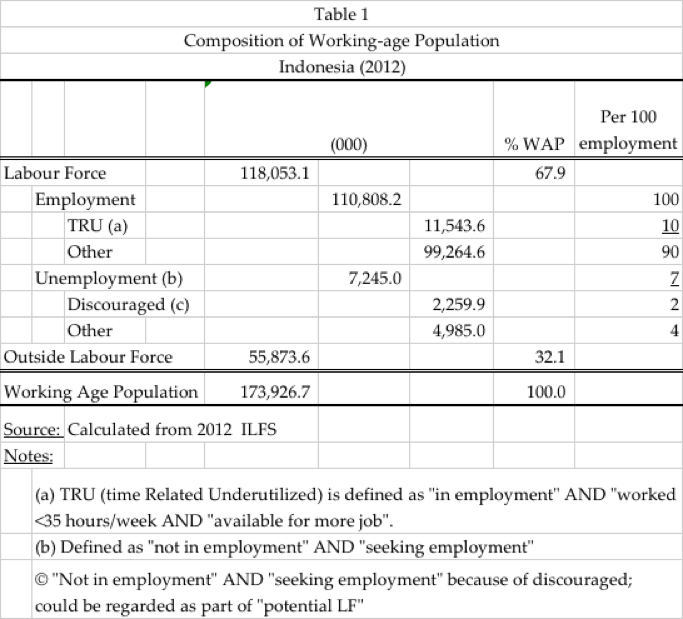
As discussed above, the Sakernas (until 2015) is unable to provide data on “potential labour force” (PLF), the second component of the labour underutilized” (LU). The reason for this is that the questionnaire of the survey does not contain the question of “the availability of work”. However, part of PLF (using ICLS-19 standard) has been included already in the unemployment rate; namely, “discouraged job seeker” (DJS).

The estimated population of DJS, according to Sakernas 2012, is around 2.26 million. This is a big number as reflected in the DRS-unemployment ratio which is about 31:100. The table also shows some numbers that can be used to estimate population or ratios of some components of Working-age Population (WAP) as below:

  • Unemployment (U) = 7.2 million, if DJS is considered as part of U (as official figure); OR 5.0 million, if DJS if DJS is considered as part of “Outside LF)” (as suggested by ICLS-19);
  • Unemployment rate= 6.1% or 4.3%; depending on how to treat DJS;
  • Time-related Underemployment (TRU) = 11.5 million
  • Labour Underemployment (LU) >= 18.8 million, if LU>=U+TRU, and
  • LU rate >= 15.9%, if LU rate = (LU/Labour Force) *100.

[Beck to Section 1]

Labour Underutilization: Concept and Measurement (2/3)

Preliminary notes:

The concept of labour underutilization as discussed in the first section is the product of the resolution of  ICLS-19 hosted by ILO aimed mainly to be used as global guidelines in the area of labour statistics.  However, as a product of an ILO resolution, the concept is not binding for the participating countries of ILO. They might not be able to promptly follow the guidelines for practical reasons and hence need some time to apply in their actual survey. Part of the reasons for the participating countries are: (1) the need to “harmonize” the concept with actual situation of labour market they face, (2) the need to maintain “consistency” (as opposed to “validity”) of labour statistics between years to avoid confusion among data users, (3) the need test carefully the practicality of the concept in actual survey, and (4) the need to follow their own priorities in statistical activities. 


Section 2: Data Availability

At first glance, it appears to be that all the proposed components of “labour underutilization” as outlined in Section 1 are readily produced by a standard labour force survey. However, that is not fully the case, at least in the case of Indonesia. Here is a brief description on that issue.

Until 2015[1], the questionnaire of Sakernas, or Indonesia Labour Force Survey (ILFS) has no question on “the availability of work”. (What is available is a question on “the readiness to accept an offer for more job” that is intended to capture “time-related underemployment” as discussed in Section 1.)

In order to produce official statistics on unemployment, Sakernas defines unemployment put simply as:

(“Not in employment”) & ((“Seeking work”) OR (“Not seeking work due “Future start”” OR “Discouraged”)).

The above definition results in the figure of unemployment as mentioned in Section 1. The definition clearly shows that “availability for work” is ignored in defining “unemployment”.

The above definition “correctly” includes “future start” (not seeking because of having a job already) but “wrongly” includes “discouraged” (not seeking because of feeling there is no opportunity) in the unemployment. According to ICLS-19, “discourage” job seeker belongs to “outside labour fore” category, not “unemployment” (hence not in “labour force” category). In other word the official statistics of unemployment of Indonesia has in fact already included “discouraged” component of “outside labour force” (per ICLS-19 standard). As will be shown soon in Section 3, this component is relatively big, roughly 31% of the unemployment in 2012.

[1] Since 2016 BPS has initiated to improve the Sakernas questionnaire in order to address most of the issues raised by ICLS-19. Processes to refine the questionnaire toward this direction are still in place, until now.

[Proceed to Section 3: Sekernas’ Lessons]


Source: Google


Labour Underutilization: Concept and Measurement (1/3)

Section 1: Unemployment and Labour Underutilization

According to Sakernas 2018 or the 2018 Indonesia’s Labor Force Survey, the estimated total of the working age population (WAP) of Indonesia (2018 ILFS) is around 194.8 million. Out of the total, 131 million are classified as labor force (LF) and seven million are the unemployed. The unemployment rate is then about 5.3%.

While many might view the unemployment rate is comparatively low, it is basically sensible given these two facts:

    • Around two-thirds of Indonesia’s employment are engaging in the informal sector, and
    • There are no social security systems applied for unemployment in this country.

In addition, given the big population of Indonesia, even such a low unemployment rate equivalent with 1.2 total population of Singapore. For further discussion on this see THIS.

Perhaps only a few (if any) who disagree on the importance of the statistics of the unemployment rate as is a leading indicator for labour market. Likewise, perhaps only a few who disagree with the notion that the unemployment rate alone already reflects the situation of the labour market appropriately.

Many believe that changes in the unemployment rate is an insensitive indicator to track the real situation in the labor market. The economic crisis, for example, this indicator does not provide a clear signal to policymakers to anticipate. In the case of the 1997 Indonesian crisis, as another example, “a puzzle” was even found: during the Mid 1997 period (before the crisis) and the end of 1998 (when peak of the crisis ended): the number of employment increased by about 1.5% and the number of unemployment decreased by 12.3% [1].

The question would be then what other statistical measures– beside unemployment rate– that can be used to reflect and monitor the dynamics of the labour market in clearer, more realistic, and more sensitive way. The 19th International Conference of Labour Statistician in 2013 (ICLS-19) accentuates such an issue and promote pose the concept of “labour underutilization” (LU).

ICLS-19 (Par. 40) proposes this concept that includes these three elements; namely, unemployment, time-related underemployment (TRU),  and potential labour force (PLF). Here are the definitions of them.

    1. Unemployment = (not in employment) AND ((seeking work AND available for work));
    2. TRU = (in employment) & ((worked less than a normal working hour) & (seeking and available for more job)).
    3. PLF (Pars. 51-55):
      • (not in employment) & ((seek empolyment) & (were not :currently available”)); i.e., unavailable job seekers, OR
      • (not in employment) & ((not “seek employument”) & (“currently available”)); i,e., available potential jobseekers.

These measures are

the basis to produce headline indicators for labour market monitoring. For more comprehensive assessment they can be used with other indicators relating to the labour market, …. in particular skill-related inadequate employment and income-related inadequate employment.. ” (Par. 41)

It is worth noting that while the first component mentioned above belongs to labour force, the third belongs to “outside labour force” as generally understood. A reference for ICLS-19 can be accessed HERE.

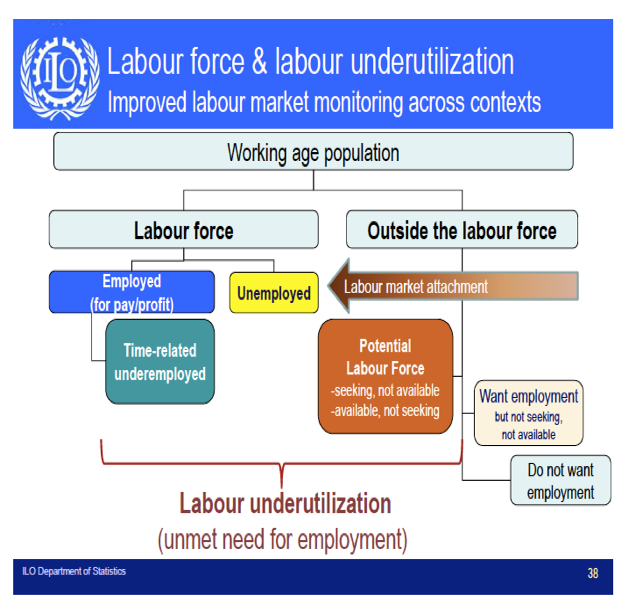
Graph 1 provides a schematic presentation of the components of LU as just mentioned. The graph shows among others that unemployment is only a fraction of a much larger LU category.

Graph 1: Composition of working age population

[1] Puguh Irawan and Uzair Suhaimi (1998:11) in Crisis, Poverty, and Human Development in Indonesia, BPS-UNDP.

[Proceed to Section 2: Data Availability]