
There is a common assumption that the Sustainable Development Goals (SDGs) represent a secular, global agenda—something external, if not foreign, to religious traditions. Read more carefully, however, the opposite becomes clear: the SDGs speak a modern language for values that religions, including Islam, have articulated for centuries.
Ending poverty, ensuring quality education, advancing social justice, and protecting the environment—these are not new moral inventions. They are contemporary expressions of enduring commitments: safeguarding life, nurturing reason, upholding human dignity, and caring for the earth. In Islamic terms, they resonate strongly with the maqāṣid al-sharī‘ah—the higher objectives of the moral law—translated into the grammar of global public policy.
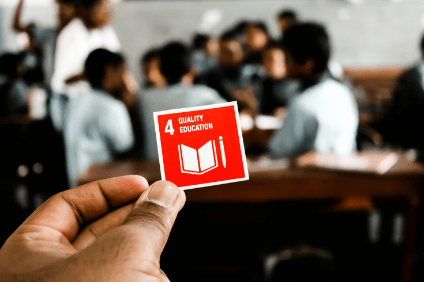
When the world speaks of No Poverty and Zero Hunger, Islam speaks of raḥmah (compassion) and ḥifẓ al-nafs (the protection of life). When global discourse emphasizes education, Islam responds with a single, powerful command: Iqra’—read, learn, understand. When climate anxiety dominates international forums, the Qur’an’s warning against ifsād fī al-arḍ—corruption and destruction of the earth—sounds strikingly contemporary.
The real misunderstanding lies not in the SDGs themselves, but in how we approach them. Too often, they are reduced to a checklist of targets and indicators. Detached from moral vision, development risks becoming numbers without soul—progress measured statistically, yet hollow in human meaning.
Here, Islam offers what technocratic frameworks cannot generate on their own: intention (niyyah), trust (amānah), and accountability before God. The essential question is not only what has been achieved, but how and for whom. Does development honor the human being as khalifah—a moral agent entrusted with responsibility—or does it quietly erode dignity in the name of efficiency?
Being a devout Muslim and a responsible global citizen are not competing identities. On the contrary, mature faith demands active engagement with the world’s shared human challenges. Withdrawal is not piety; ethical participation is.
The SDGs provide a shared language for global cooperation. Islam contributes the direction—a moral compass that keeps human flourishing, justice, and responsibility at the center. The final question, then, is simple but decisive: Will we remain spectators of the global agenda—or will we help shape it with values, conscience, and responsibility?
Note:
A more comprehensive, in-depth, and systematic exploration of this theme is presented in Khalifah sebagai Sintesis Kosmis: Fusi Hikmah Mullā Ṣadrā dan Tanggung Jawab Global by Uzair Suhaimi, forthcoming from Nas Media Pustaka. The book offers a bold philosophical–spiritual synthesis, bringing together classical Islamic wisdom—particularly the metaphysical insights of Mullā Ṣadrā—with the ethical and civilizational challenges of the contemporary global order. A PDF version of the book is available via the following [link ]
 Jejak Pemikiran dan Refleksi